
Every financial decision you make has a hidden price tag nobody shows you
Every decision you make with money has two price tags.
The first is visible. It is the amount on the receipt, the balance deducted from your account, the number on the loan statement.
The second is invisible. It is what that money could have become if it had gone somewhere else. The return it would have earned. The goal it would have funded. The future it would have helped build.
This second price tag is called opportunity cost. And it is almost never shown to you when you are making the decision.
What opportunity cost actually means
Opportunity cost is the value of the next best alternative you gave up when you made a choice.
When you spend ₦500,000 on a car upgrade, the opportunity cost is not just ₦500,000. It is what ₦500,000 invested for ten years would have become, potentially ₦1.3 million at a 10% annual return.
When you keep ₦2,000,000 in a savings account earning 5% for five years, the opportunity cost is the difference between ₦2,552,000 (what the account gives you) and what the same amount in a 15% vehicle would have produced approximately ₦4,022,000. A difference of ₦1.47 million.
When you delay starting your investment by two years “waiting until things settle” the opportunity cost is two years of compounding on every naira you would have invested. On a ₦50,000 monthly contribution, that delay costs more than most people are comfortable calculating.
Why opportunity cost is almost always hidden
The reason most financial decisions feel simpler than they are: you only see what you are getting. Rarely what you are giving up.
The car dealership shows you the car, the monthly repayment, and the upgrade from your current vehicle. They do not show you the investment return you are foregoing, the compound growth of the repayments you are committed to, or the net worth impact over a decade.
The savings account shows you your balance and the interest you earned. It does not show you the real return adjusted for inflation, or what the same money would have earned in a different vehicle over the same period.
Every financial product and service is presented in terms of what it gives you. Opportunity cost is the thing you have to calculate for yourself.
The three places opportunity cost hits hardest
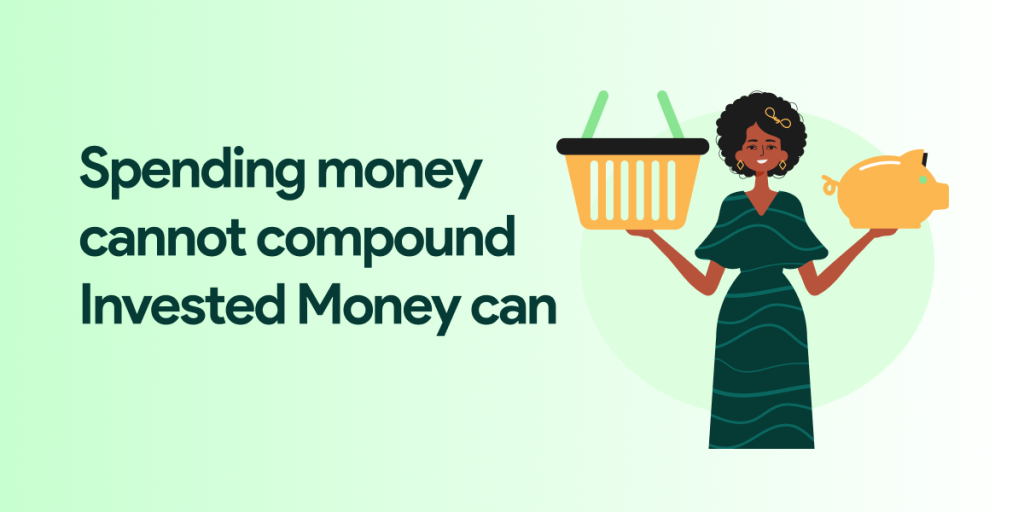
In lifestyle inflation: every time income rises and spending rises to match it, the opportunity cost is the investment those additional naira could have funded. Spent money cannot compound. Invested money can.
In delayed starting: the opportunity cost of waiting one year, two years, five years, is measured not in the contributions missed, but in the compounding of those contributions never produced. Time lost at the start of an investment horizon is disproportionately expensive.
In high-cost debt: every naira going toward high-interest loan repayments has an opportunity cost of what it could have earned in an investment instead. This is why high-interest debt is so damaging, it not only costs you the interest, but it costs you the investment return of every naira consumed by interest payments.
How to use opportunity cost as a decision-making tool
Before any significant financial decision, ask one question: what is the best alternative use of this money?
Not as a way to prevent enjoyment, spending on things that matter is a valid use of money. But as a way to make the decision with full information about what it actually costs, including the invisible price tag.
Sometimes the answer confirms the decision: the experience or purchase is worth more to you than the foregone return. That is a legitimate choice made with open eyes.
Sometimes the answer changes the decision: the foregone return turns out to be more valuable than what you were about to spend on. That is financial literacy in action.
The goal is not to optimize every decision for return. It is to make every decision knowing the full price,visible and invisible.
This is what Money Africa teaches and what Ladda helps you capture
Every month your savings are automated through Ladda is a month where the opportunity cost of inaction is captured rather than surrendered.
The return you would have missed by waiting. The compounding that would have been lost to delay. The contribution that would have never happened if the decision had to be made manually every month.
Automation does not just save you time. It captures opportunity costs that would otherwise be lost to the friction of indecision.
Download Ladda: getladda.com
Start learning: moneyafrica.com
To seeing both price tags on every decision,
The Money Africa Team
This newsletter is for educational purposes only and does not constitute financial advice.