
Sometimes, the smartest financial decision you can make is not to make a financial decision immediately.
We live in a world that constantly tells us to do more with our money.
Invest more.
Buy that stock.
Take that loan.
Upgrade your lifestyle.
Start a side hustle.
Buy the dip.
Don’t miss out.
And because everyone seems to be moving, sitting still can feel like falling behind.
But what if it isn’t?
What if taking a financial pause is sometimes exactly what your money needs?
A financial pause is not the same as doing nothing
A financial pause simply means slowing down long enough to think before making an important money decision.
It could mean waiting before buying something expensive.
It could mean taking a step back from investing when you are making decisions emotionally.
It could mean reviewing your expenses before increasing your lifestyle.
It could even mean keeping your money in cash for a while because you haven’t found an investment that makes sense for you yet.
The goal isn’t to become afraid of spending or investing, but to stop making financial decisions on the spot.
Because sometimes, the cost of rushing is higher than the cost of waiting.
Think about the things you buy when you’re emotional
Have you ever had a stressful day and decided to order something you didn’t really need?
Or received your salary and suddenly felt like you could afford a new phone, clothes, a weekend trip and dinner with friends?
Then, two weeks later, you are wondering:“Where did all my money go?”
This is why financial discipline is not just about knowing how to calculate returns.
It is also about understanding yourself.
A financial pause gives you the opportunity to ask:
Do I actually need this, or do I just want it right now?
That small question can save you a surprising amount of money.
The same principle applies to investing
Investing can make people feel like they always need to be doing something.
The market is moving, a stock is trending, someone just posted about a 100% return.
Your friend says they made money from a particular investment.
Suddenly, you feel like you are missing out, so you invest.
Not because you understand the investment.
Not because it fits your financial goals.
But because you don’t want to be left behind.
That is how FOMO (fear of missing out) becomes an investment strategy.
And it is rarely a good one.
A financial pause gives you room to ask better questions:
What am I investing for? How long can I leave this money invested? What risks am I taking? What happens if the investment loses 20%? Do I actually understand what I’m buying?
Sometimes, after answering these questions, you will still invest.
Other times, you will realise that the best decision is to wait.
Both are valid outcomes.
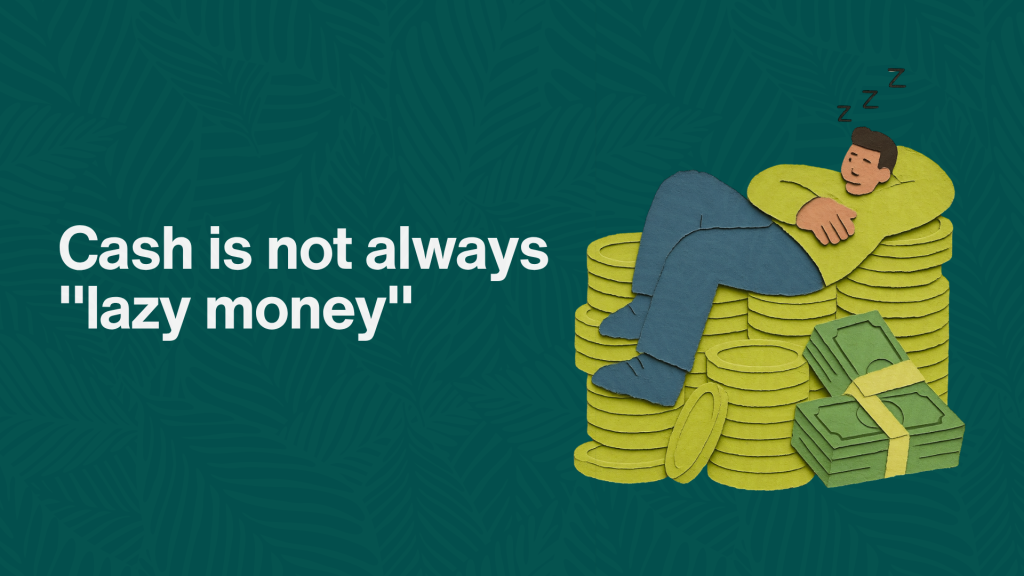
Cash is not always “lazy money”
There is also an important lesson here for people who feel guilty whenever their money is not invested.
Not every naira needs to be invested immediately.
If you don’t have an emergency fund, investing aggressively may not be your priority.
If you have expensive debt, paying it down may make more sense than chasing investment returns.
If you have a major financial goal coming up soon, preserving your money may be more important than taking unnecessary investment risk.
And if you simply don’t understand an investment, you don’t have to buy it just because everyone else is buying it.
Sometimes, keeping money safe while you figure out your next move is a financial decision too.
A pause can also protect you from lifestyle inflation
There is another area where financial pauses can be incredibly powerful: your lifestyle.
You get a salary increase.
Instead of increasing your savings and investments first, your expenses increase.
Better apartment, more subscriptions, more expensive restaurants, new gadgets, more trips.
Suddenly, the salary increase that was supposed to improve your financial position has simply created a more expensive lifestyle.
This is why every increase in income should come with a pause.
Before upgrading your lifestyle, ask:
“What if I kept living like this for another six months and invested the difference?”
You might discover that you don’t actually need the upgrade.
Or you might realise that you can afford it comfortably.
Either way, you are making the decision intentionally rather than automatically.
The pause gives your money a chance to catch up with your goals
There’s no competition in achieving financial goals.
You don’t have to buy everything this year.
You don’t have to own every investment.
You don’t have to keep up with someone else’s financial timeline.
Your friend may be buying a house.
Someone else may be investing ₦500,000 every month.
Another person may already have a diversified portfolio.
That doesn’t mean you are behind.
Your financial plan should be based on your income, your responsibilities, your goals and your risk tolerance.
The purpose of investing isn’t to look rich today, but to become financially stronger over time. And sometimes, that requires patience.
Sometimes, the best financial move is the one you don’t make
Money grows not only through the decisions we make, but also through the bad decisions we avoid.
Avoiding an unnecessary loan, impulse purchase, an investment you don’t understand, lifestyle inflation, panic selling, and pressure to keep up with everyone else.
These decisions may not look exciting.
But they can quietly make a huge difference to your financial future.
Because you don’t always build wealth by moving faster. Sometimes, you build it by knowing when to pause.
Sometimes, that pause will save you money.
Sometimes, it will prevent a bad investment.
And sometimes, it will give you the confidence to make the right move.
Your money doesn’t always need more action. Sometimes, it needs more thought.
If you want to enjoy a seamless saving experience, explore Ladda. It’s designed to help you save consistently and grow at your own pace.
Get started here: www.getladda.com
Team MoneyAfrica